





Vol. 27. Núm. 3.
Páginas 44-55 (Marzo 2020)

Capítulo 7
Sífilis

Josep Manel Casanovaa*Nadia AbdulghanibChristian Manzardob
Doi : https://10.1016/j.fmc.2020.03.006
Opciones
Puntos para una lectura rápida

  • •

    Existe una reemergencia de los casos de sífilis a partir del momento en que apareció el tratamiento triple para el síndrome de inmunodeficiencia adquirida y se perdió el miedo a la enfermedad. El principal reservorio son los varones homo- y bisexuales (hombres que tienen sexo con hombres [HSH]) y las mujeres trabajadoras del sexo que consumen metanfetaminas.

  • •

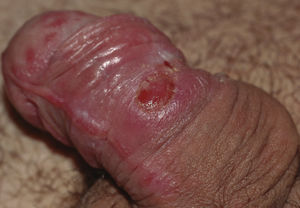
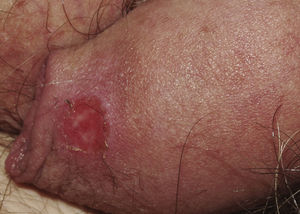
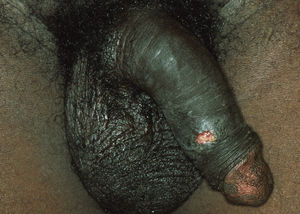
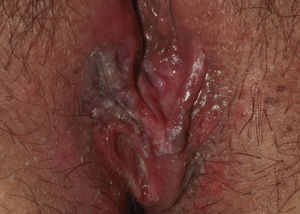
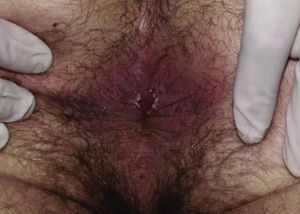
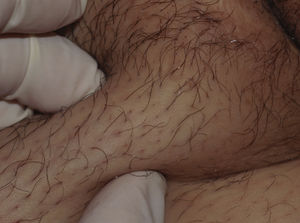
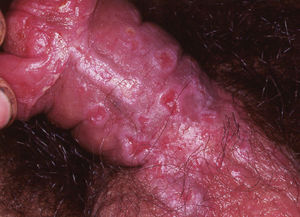
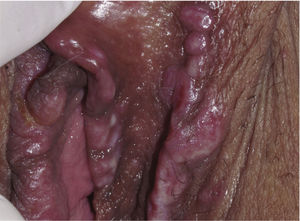
    La sífilis primaria o chancro luético es la segunda causa de úlcera genital, por detrás del herpes genital. En la mujer, en muchas ocasiones pasa desapercibida al ser una infección asintomática y en ocasiones oculta. Se asocia habitualmente a adenopatías inguinales. Tanto la lesión primaria como las adenopatías son asintomáticas.

  • •

    El chancro suele durar unas 3 semanas antes de autoinvolucionar espontáneamente. Al tratarse de una lesión ulcerada se facilita la coinfección con el virus de la inmunodeficiencia humana (VIH). Según un estudio realizado en Barcelona, el 94% de los infectados por sífilis eran HSH y el 62% estaban coinfectados por VIH.

  • •

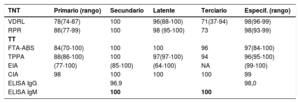
    El diagnóstico de la sífilis primaria se confirma mediante el microscopio de campo oscuro del frotis de la úlcera. Se trata de un método laborioso disponible únicamente en laboratorios especializados. Está siendo sustituido por una PCR del frotis que proporciona una sensibilidad y especificidad superior al 95% (hay un test de amplificación de ácidos nucleicos [TAAN] múltiplex que detecta simultáneamente virus del herpes simple [VHS]). Las serologías en esta fase son negativas; el FTA-Abs se positiviza al final del estadio primario (el RPR se positiviza más tarde). También es útil el ELISA IgG y una técnica de inmunoensayo por electroquimioluminiscencia (ECLIA), que proporcionan una sensibilidad y especificidad cercana al 99%.

  • •

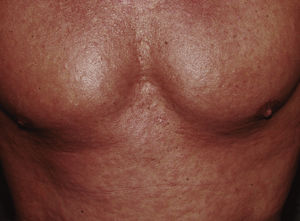
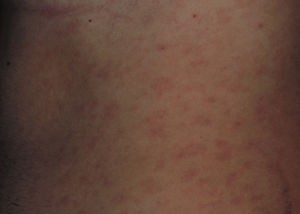
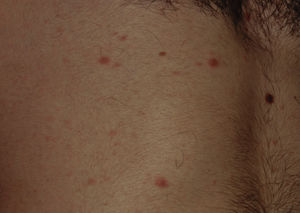
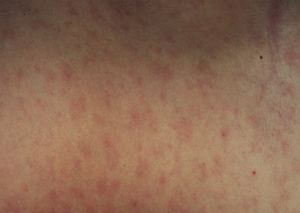
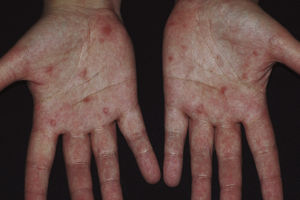
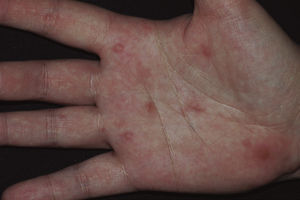
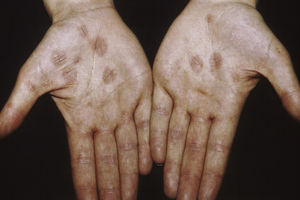
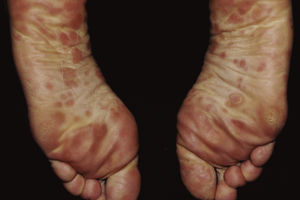
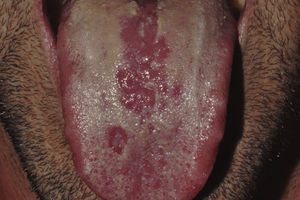
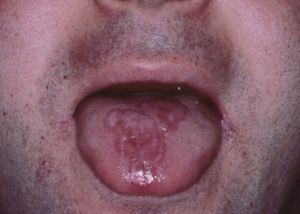
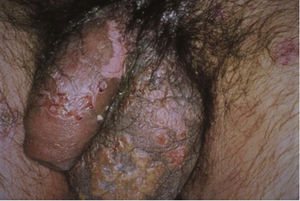
    Se ha de sospechar sífilis secundaria ante todo paciente sexualmente activo con una erupción eritematosa maculopapular y persistente (más de 10 días), en especial si hay afectación palmoplantar y de mucosas.

  • •

    La confirmación de la sífilis secundaria se realiza mediante una serología convencional (test no treponémicos de alta sensibilidad: VDRL, RPR, y test treponémicos clásicos como el FTA-Abs o los más modernos como el ELISA IgG e IgM o inmunoensayo por ECLIA, que proporcionan una sensibilidad y especificidad superiores al 95%).

  • •

    Para evitar la sífilis congénita se debería realizar una serología luética convencional en la primera visita de control del embarazo con el fin de instaurar tratamiento lo más precozmente posible. También son muy importantes los trabajadores sociales para reclutar para el sistema nacional de salud pacientes embarazadas excluidas del mismo.

  • •

    El tratamiento de la sífilis primaria, de la secundaria y de la latente de menos de 1 año de duración consiste en penicilina benzatina 2,4 millones de UI por vía i.m. en 1 sola dosis. Para la latente de más de 1 año y la indeterminada se recomienda penicilina benzatina 2,4 millones de UI por vía i.m. en 3 dosis separadas entre sí por una semana cada una.

Palabras clave
Treponema pallidum
Chancro luético
Secundarismo
Sífilis congénita
Penicilina
Test treponémicos y no treponémicos
Algoritmo inverso

Identifíquese

¿Aún no es suscriptor de la revista?
Comprar el acceso al artículo

Comprando el artículo el pdf del mismo podrá ser descargado

Teléfono para incidencias

De lunes a viernes de 9h a 18h (GMT+1) excepto los meses de julio y agosto que será de 9 a 15h
Llamadas desde España 932 415 960
Llamadas desde fuera de España +34 932 415 960
Bibliografía
[1]
M. Arando Lasagabaster, L. Otero Guerra.
Syphilis.
Enferm Infecc Microbiol Clin., (2019),
[2]
M.E. Patton, J.R. Su, R. Nelson, H. Weinstock.
Centers for Disease Control and Prevention (CDC). Primary and secondary syphilis--United States, 2005-2013.
MMWR Morb Mortal Wkly Rep., (2014), 63 pp. 402-406
[3]
A. Junco-Fernández, M.C. Montgomery, C. Crowley, T. Bertrand, T.P. Marak, M.A. Maynard, et al.
Increasing Syphilis in Rhode Island: Return of an Old Foe.
R I Med J., (2019), 102 pp. 50-54
[4]
S.E. Kidd, J.A. Grey, E.A. Torrone, H.S. Weinstock.
Increased Methamphetamine, Injection Drug, and Heroin Use Among Women and Heterosexual Men with Primary and Secondary Syphilis - United States, 2013-2017.
MMWR Morb Mortal Wkly Rep., (2019), 68 pp. 144-148
[5]
D. Viriot, N. Fournet, C. Pioche, B. De Barbeyrac, A. Goubard, et al.
Referents For The Regional Offices Of The French National Public Health Agency. Bacterial sexually transmitted infections in France: recent trends and patients’ characteristics in 2016.
Euro Surveill., (2019), pp. 24
[6]
X. Fustà, I. Fuertes, R. Lugo-Colón, J.L. Blanco, N. Baras, M. Alsina-Gibert.
Syphilis epidemics: a descriptive study of patients diagnosed in a tertiary hospital between 2011 and 2015.
Med Clin (Barc)., (2017), 149 pp. 536-539
[7]
A.P. Casanova, R. Guaita Calatrava, L. Soriano Llinares, A. Miguez Santiyán, A. Salazar Cifre.
Vigilancia epidemiológica de la sífilis en la ciudad de Valencia. Impacto y evolución del período 2003-2014.
Enferm Infecc Microbiol Clin., (2016), 34 pp. 52-58
[8]
A. Gayet-Ageron, P. Sednaoui, S. Lautenschlager, T. Ferry, L. Toutous-Trellu, M. Cavassini, et al.
Use of Treponema pallidum PCR in testing of ulcers for diagnosis of primary syphilis.
Emerg Infect Dis., (2015), 21 pp. 127-129
[9]
S. Ramoni, A. Ponziani, V. Boneschi, A. Pastena, M. Cusini.
Annular secondary syphilis.
G Ital Dermatol Venereol., (2019), 154 pp. 93-94
[10]
W.A. Eyer-Silva, J.E.B. Campos, R.S. Carvalho, I. Carvalho-Rangel, R. Trindade-Azevedo, R. Neves-Motta.
Rounded atrophic areas on the dorsum of the tongue: plaques en prairie fauchée of secondary syphilis.
IDCases., (2018), 15 pp. e00480
[11]
S. Dai, H. Wang, Z. Lin.
Moth-eaten Alopecia in secondary syphilis.
Int J Infect Dis., (2019),
[12]
M. Walker, R. Wisler, J. Simmons, A. Johnson.
A Case of Early Neurosyphilis.
J La State Med Soc., (2017), 169 pp. 47-48
[13]
S. Munshi, S.K. Raghunathan, I. Lindeman, A.K. Shetty.
Meningovascular syphilis causing recurrent stroke and diagnostic difficulties: a scourge from the past.
BMJ Case Rep. 2018, (2018),
[14]
I.K. McGill, M. Agius.
Tertiary Syphilis (General Paralysis of the Insane) and Bipolar Disorder; the role of these two disorders in the life of famous composers.
Psychiatr Danub., (2018), 30 pp. 563-566
[15]
M.L. Tong, Y.Y. Chen, X.Z. Zhu, K. Gao, H.L. Zhang, W.H. Zheng, et al.
Comparison of Clinical and Laboratory Characteristics of General Paresis and Non-Neurosyphilis Dementia.
Eur Neurol., (2018), 80 pp. 82-86
[16]
I.L. Bharwani, C.O. Hershey.
The elderly psychiatric patient with positive syphilis serology: the problem of neurosyphilis.
Int J Psychiatry Med., (1998), 28 pp. 333-339
[17]
Y.Q. Zhang, M. Huang, X.Y. Jia, Y.F. Zou, D. Chen.
A clinical study of new cases of parenchymal neurosyphilis: has tabes dorsalis disappeared or been missed?.
J Neuropsychiatry Clin Neurosci., (2015), 27 pp. e17-e21
[18]
B. Fernandes, A. Santos, L. Carvalho.
Syphilitic Aortitis Diagnosis in Clinical Setting.
Rev Port Cir Cardiotorac Vasc., (2017), 24 pp. 166
[19]
F. Drago, G. Merlo, A. Rebora, A. Parodi.
Syphilitic aortitis and its complications in the modern era.
G Ital Dermatol Venereol., (2018), 153 pp. 698-706
[20]
R. Žvirblytė, E. Ereminienė, A. Montvilaitė, A. Jankauskas, V. Ivanauskas.
Syphilitic coronary artery ostial stenosis resulting in acute myocardial infarction.
Medicina (Kaunas)., (2017), 53 pp. 211-216
[21]
S. Rahima, N. Riyaz, E.N. Latheef, P.M. Shyni.
Squamous cell carcinoma on a syphilitic gumma: A unique presentation.
Indian J Sex Transm Dis AIDS., (2015), 36 pp. 89-91
[22]
C. Asselin, N. Ekindi, A. Carignan, P.O. Richard.
Gummatous penile syphilis.
IDCases., (2019), 18 pp. e00589
[23]
X. Shao, D. Qiang, Y. Liu, Q. Yuan, J. Tao, B. Ji.
Diagnosis and Treatment of Cerebral Syphilitic Gumma: A Report of Three Cases.
Front Neurosci., (2018), 12 pp. 100
[24]
J.S. Slutsker, R.R. Hennessy, J.A. Schillinger.
Factors Contributing to Congenital Syphilis Cases - New York City, 2010-2016.
MMWR Morb Mortal Wkly Rep., (2018), 67 pp. 1088-1093
[25]
US Preventive Services Task Force, S.J. Curry, A.H. Krist, D.K. Owens, M.J. Barry, A.B. Caughey, K.W. Davidson, et al.
Screening for Syphilis Infection in Pregnant Women: US Preventive Services Task Force Reaffirmation Recommendation Statement.
JAMA., (2018), 320 pp. 911-917
[26]
Y. Wang, M. Wu, X. Gong, L. Zhao, J. Zhao, C. Zhu, et al.
Risk Factors for Congenital Syphilis Transmitted from Mother to Infant - Suzhou, China, 2011-2014.
MMWR Morb Mortal Wkly Rep., (2019), 68 pp. 247-250
[27]
E.L. Korenromp, J. Rowley, M. Alonso, M.B. Mello, N.S. Wijesooriya, S.G. Mahiané, et al.
Global burden of maternal and congenital syphilis and associated adverse birth outcomes-Estimates for 2016 and progress since 2012.
PLoS One., (2019), 14 pp. e0211720
[28]
K. Salado-Rasmussen.
Syphilis and HIV co-infection. Epidemiology, treatment and molecular typing of Treponema pallidum.
Dan Med J., (2015), 62
[29]
Y.M. Cai, Y.J. Song, H. Liu, F.C. Hong.
[Factors associated with syphilis/HIV infection among men who have sex with men in Shenzhen, 2011-2016].
Zhonghua Yu Fang Yi Xue Za Zhi., (2017), 51 pp. 994-1000
[30]
M. Mutagoma, L. Nyirazinyoye, D. Sebuhoro, D.J. Riedel, J. Ntaganira.
Syphilis and HIV prevalence and associated factors to their co-infection, hepatitis B and hepatitis C viruses prevalence among female sex workers in Rwanda.
BMC Infect Dis., (2017), 17 pp. 525
[31]
L.M.W. Acosta, T.R. Gonçalves, N.T. Barcellos.
Coinfecção HIV/sífilis na gestação e transmissão vertical do HIV: um estudo a partir de dados da vigilância epidemiológica.
Rev Panam Salud Publica., (2016), 40 pp. 435-442
[32]
R.F. Niama, N.C. Loukabou Bongolo, E.S. Bayonne Kombo, R. Yengo, P.I. Mayengue, E.B. Mandingha Kosso, et al.
Syphilis and HIV infections among pregnant women attending antenatal clinics in Republic of Congo.
[33]
V. Merins, K. Hahn.
Syphilis and neurosyphilis: HIV-coinfection and value of diagnostic parameters in cerebrospinal fluid.
Eur J Med Res., (2015), 20 pp. 81
[34]
M.M. Taylor, W.Y. Li, J. Skinner, T. Mickey.
Viral loads among young HIV-infected men with early syphilis.
J Int Assoc Provid AIDS Care., (2014), 13 pp. 501-505
[35]
M. Marschalkó, K. Pónyai, S. Kárpáti.
Szexuálisan terjedő koinfekciók. HIV koinfekciók.
Orv Hetil., (2015), 156 pp. 4-9
[36]
T.B. Tafesse, A.A. Gebru, S. Gobalee, G.D. Belay, M.T. Belew, D. Ataro, et al.
Seroprevalence and diagnosis of HIV, HBV, HCV and syphilis infections among blood donors.
Hum Antibodies., (2017), 25 pp. 39-55
[37]
D. Lawrence, F. Cresswell, J. Whetham, M. Fisher.
Syphilis treatment in the presence of HIV: the debate goes on.
Curr Opin Infect Dis., (2015), 28 pp. 44-52
[38]
US Preventive Services Task Force (USPSTF), K. Bibbins-Domingo, D.C. Grossman, S.J. Curry, K.W. Davidson, J.W. Epling Jr., F.A. García, et al.
Screening for Syphilis Infection in Nonpregnant Adults and Adolescents: US Preventive Services Task Force Recommendation Statement.
JAMA., (2016), 315 pp. 2321-2327
[39]
D.D. Rhoads, J.R. Genzen, C.P. Bashleben, J.D. Faix, M.Q. Ansari.
Prevalence of Traditional and Reverse-Algorithm Syphilis Screening in Laboratory Practice: A Survey of Participants in the College of American Pathologists Syphilis Serology Proficiency Testing Program.
Arch Pathol Lab Med., (2017), 141 pp. 93-97
[40]
C. Gambiez, C. Garet, M. Choquet, V. Decroix, E. Pluquet, R. Guiheneuf, et al.
Limited efficacy of nontreponemal test combined with treponemal test in the initial syphilis screening algorithm.
J Med Microbiol., (2019), 68 pp. 216-220
[41]
A. Brischetto, I. Gassiep, D. Whiley, R. Norton.
Retrospective Review of Treponema pallidum PCR and Serology Results: Are Both Tests Necessary?.
J Clin Microbiol., (2018), pp. 56
[42]
S. Lee, H.J. Yu, S. Lim, H. Park, M.J. Kwon, H.Y. Woo.
Evaluation of the Elecsys Syphilis electrochemiluminescence immunoassay as a first-line screening test in the reverse algorithms for syphilis serodiagnosis.
Int J Infect Dis., (2019), 80 pp. 98-104
[43]
J. Yi, W. Choi, S. Shin, J. Choi, H. Kim, H.J. Chung, et al.
Strategy for performing treponemal tests in reverse-sequence algorithms of syphilis diagnosis.
Clin Biochem., (2019), 63 pp. 121-125
[44]
M. Pastuszczak, M. Sitko, M. Bociaga-Jasik, J. Kucharz, A. Wojas-Pelc.
Lack of antiretroviral therapy is associated with higher risk of neurosyphilis among HIV-infected patients who remain serofast after therapy for early syphilis.
Medicine (Baltimore)., (2018), 97 pp. e13171
[45]
L.E. Spydell.
Congenital Syphilis and the Prozone Phenomenon: A Case Study.
Adv Neonatal Care., (2018), 18 pp. 446-450
[46]
C. Ros-Vivancos, M. González-Hernández, J.F. Navarro-Gracia, J. Sánchez-Payá, A. González-Torga, J. Portilla-Sogorb.
Evolución del tratamiento de la sífilis a lo largo de la historia.
Rev Esp Quimioter., (2018), 31 pp. 485-492
[47]
C. Leeyaphan, P. Punyaratabandhu, S. Jiamton, N. Junsuwan, P. Chirachanakul, P. Chanyachailert, et al.
Predictors of serological cure after treatment in patients with early syphilis: A retrospective observational study in Thailand.
Indian J Dermatol Venereol Leprol., (2019), 85 pp. 235
[48]
M. Arando Lasagabaster, L. Otero Guerra.
Syphilis.
Enferm Infecc Microbiol Clin., (2019),
[49]
G.B. Gomez, M.L. Kamb, L.M. Newman, J. Mark, N. Broutet, S.J. Hawkes.
Untreated maternal syphilis and adverse outcomes of pregnancy: a systematic review and meta-analysis.
Bull World Health Organ., (2013), 91 pp. 217-226
[50]
H. Liu, N. Chen, J. Yu, W. Tang, J. He, H. Xiao, et al.
Syphilis-attributable adverse pregnancy outcomes in China: a retrospective cohort analysis of 1187 pregnant women with different syphilis treatment.
BMC Infect Dis., (2019), 19 pp. 292
[51]
I.A. Stafford, A. Berra, C.G. Minard, V. Fontenot, R.H. Kopkin, E. Rodrigue, et al.
Challenges in the Contemporary Management of Syphilis among Pregnant Women in New Orleans.
LA. Infect Dis Obstet Gynecol., (2019), 2019 pp. 2613962
[52]
K.A. Workowski, G.A. Bolan.
Centers for Disease Control and Prevention. Sexually transmitted diseases treatment guidelines, 2015.
MMWR Recomm Rep., (2015), 64 pp. 1-137